Sports Editorial: GFA’s bright ideas need bold action
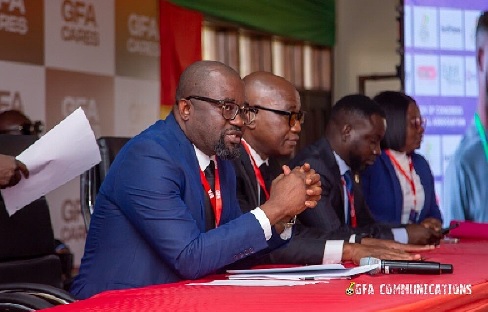
The Ghana Football Association’s 32nd Ordinary Congress might have come and gone, but two announcements made during the gathering deserve far more attention than the routine approval of reports and preparations for a new football season.
The unveiling of the GFA Diaspora Strategy and the GFA Foundation Player Welfare Initiative signals an encouraging shift in thinking about the future of Ghana’s football.
They are ideas that seeks to address long-standing gaps in the game. However, good ideas alone will not transform Ghana football. Effective implementation will.
The decision to formally launch a Diaspora Strategy is both timely and necessary. Ghana has, for too long, approached players of Ghanaian descent only after they have become established in Europe’s top leagues.
By then, national allegiance had often been shaped by years of development within another country’s football system.
A structured approach to identifying young talent abroad, engaging their families and building relationships with clubs is a smarter and more proactive model.
It allows Ghana to connect with promising players before they become international stars and before difficult choices about national-team representation arise.
The success of the GFA’s talent identification exercise in the United Kingdom suggests there is enormous potential in the Ghanaian diaspora.
Across Europe and North America, countless young footballers with Ghanaian roots are progressing through elite academies. Ghana cannot afford to ignore that talent pool.
Yet, enthusiasm for the diaspora initiative must be matched with caution. Ghana’s domestic football remains the backbone of the national game.
Every season, young players in the Ghana Premier League, Division One League and juvenile competitions dream of wearing the national colours through hard work and performance.
The Black Stars should never become a destination reserved primarily for players developed abroad. A successful Diaspora Strategy must strengthen the national teams without closing the door on locally developed talent.
The message should be clear, talent matters, whether it is discovered in Kumasi, Tamale, Accra, London or Amsterdam.
Equally important is the GFA Foundation’s Player Welfare Initiative. This announcement reflects a growing recognition that football administration must extend beyond organising competitions and selecting national teams.
Far too many Ghanaian footballers have faced uncertainty after retirement, career-threatening injuries or financial hardship. Welfare cannot remain an afterthought.
A sustainable football ecosystem must provide support systems that protect players during and after their careers.
The foundation has an opportunity to establish programmes that offer medical support, education, career transition assistance and emergency relief for vulnerable players.
Such interventions would represent a significant investment in the people who make the game possible.
However, football in Ghana has seen many promising initiatives announced with excitement only to fade quietly with time. That is why transparency, funding and accountability will be essential.
The GFA must clearly communicate how these programmes will operate, who will benefit and how success will be measured.
Ultimately, this year’s congress should not be judged by speeches or presentations. It should be judged by results.
If the Diaspora Strategy consistently identifies and integrates talented young players while strengthening, not weakening, the domestic pathway, it will be a success.
If the Player Welfare Initiative genuinely improves the lives of current and former footballers, it will be a landmark achievement.
The GFA has presented a vision that looks beyond the next football season. Now it must demonstrate the commitment, consistency and courage to turn that vision into lasting progress for Ghanaian football.