Strengthen domestic financing to support education in emergencies - Dr Apaak to West African countries
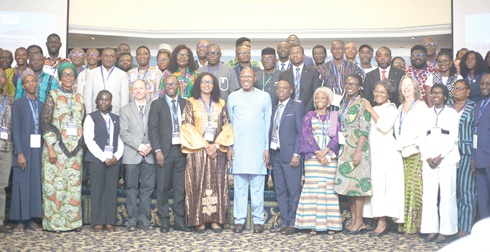
The Deputy Minister of Education, Dr Clement Abas Apaak, has charged countries in the West African sub-region to strengthen domestic financing and regional co-operation in addressing educational issues during emergencies.
He said although development partners were vital and doing well, sustainability required that governments own such an agenda and budget for it.
Resources, he said, must not only be allocated but well used and that required strong leadership, clear accountability, effective coordination and a relentless focus on results.
Coordination
“Our borders are porous to conflict, climate shocks and disease, so our responses must be coordinated, sharing data, lessons and solutions across West Africa,” Dr Apaak said at the opening of the Second High Level Conference on Scaling Education Initiatives in Emergencies (EiE) in West Africa in Accra yesterday.
The conference, on the theme "Research Evidence to Scale Education Innovation and Investment in West Africa", is being organised by Associates for Change (AfC) in collaboration with the Ministry of Education.
More than 150 policymakers, researchers and development partners from Ghana, Burkina Faso, Nigeria and other countries are in attendance.
Dr Apaak outlined four priorities for deliberations, with the first being investing in resilience before the crisis, not only responding during it.
“Risk analysis, contingency planning and safe school infrastructure cost far less than rebuilding after the fact, as COVID-19 showed when systems had to improvise remote learning almost overnight.
The second, he said, was to scale what worked and that “what we lack is the courage and financing to take proven models to national scale”.
Equity, emergencies
Again, Dr Apaak said there was the need to put equity at the centre of education delivery and that gender equality and social inclusion were not add-ons, saying if programmes did not reach girls, children who are challenged and the displaced, it meant that they were failing.
Those shocks, he said, did not fall equally and that they fell hardest on girls, on children who are challenged, on the rural poor and on those already furthest behind.
“For too long, education in emergencies has been driven by urgency alone. Urgency matters, but urgency without evidence wastes scarce resources and can fail the very children we mean to serve,” he said.
Grassroots level
The Director of AfC, Dr Leslie Casely-Hayford, said that at the grassroots level, non-governmental organisations and civil society are working to provide evidence on psychosocial support for teachers, on social-emotional learning for children and most importantly, foundation learning.
“We have to tailor rapid and supportive mechanisms to bring the next generation to foundation learning.
With growing unrest and fragility across, especially West Africa, the majority of children may not enter formal education where their communities and their schools have become a haven of distress,” she said.
The Technical Advisor to the Minister of Education, Prof. George K. T. Oduro, who chaired the opening session, said instability in the sub-region had worsened the challenge of out-of-school children.