STAAG calls for hearing, speech therapy services in regional hospitals
The Speech Therapists and Audiologists Association of Ghana (STAAG) has called for the establishment of audiology, speech and language therapy services in all regional hospitals to improve access to hearing and communication healthcare.
The association said although its members were trained to provide critical services, the lack of facilities and limited employment opportunities in the public health sector continued to restrict access to those services.
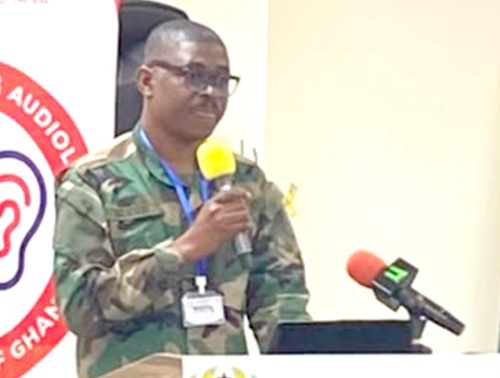
The President of STAAG, Major Emmanuel Deladem Nkornoo, made the call in Accra at the association’s Annual General Meeting (AGM) and Scientific Conference.
“We are seeking establishment of audiology, speech and language therapy facilities across all levels of healthcare in Ghana.
At least every regional hospital should have our services, which will eventually trickle down to the districts and municipal hospitals.
So for now, we are seeking for the regional hospitals to start with these services,” he said.
The conference formed part of STAAG’s efforts to promote professional development, research and improved hearing and communication healthcare in the country.
It was on the theme: “Shaping the Future of Communication and Hearing Healthcare: From Evidence to Impact.”
Employment challenges
Major Nkornoo said the association currently had 95 members, comprising 58 audiologists and 37 speech and language therapists, but fewer than five audiologists were on the Ministry of Health’s payroll.
He said the Ghana Health Service had no audiologist on its payroll, while qualified and licensed speech and language therapists practising at the Korle Bu Teaching Hospital were captured as audiologists because of the absence of a speech and language therapy skill on the single spine salary structure.
“Since the qualification of the first batch of our professionals in 2013, the professional body has never received any clearance for recruitment,” he said.

Participants in the association’s annual general meeting
He said graduates from the University of Ghana, Kwame Nkrumah University of Science and Technology (KNUST) and the University of Health and Allied Sciences (UHAS) who had trained in audiology, speech and language therapy were unemployed.
Major Nkornoo said the few professionals in employment were mainly those who had pursued master’s degrees and were already working in the health system before moving into the new professions.
Cost of hearing aids
The STAAG President also called for a tax waiver on the importation of hearing aids and equipment to make the devices more affordable to people with hearing loss.
He said hearing aids were not manufactured in Ghana or Africa and were mostly imported from Western countries, with prices quoted in euros and US dollars.
“The cost of average quality hearing aids currently in Ghana, for one, for one year, ranges from Ghc10,000 to about Ghc25,000 , just for one,” he said.
Major Nkornoo said the high cost of the devices discouraged people with hearing loss from using them, with untreated or unrehabilitated hearing loss having effects on children’s education, social development and wellbeing.
He, therefore, called for hearing aid services, audiology and speech and language therapy services to be included in the National Health Insurance Scheme (NHIS) to make them accessible to more people.
“I, therefore, make this call for inclusion of hearing aid services and audiology and speech and language therapy services to be included in the National Health Insurance Scheme so that members can patronise our services,” he said.
Training opportunities
The Registrar of the Allied Health Professions Council, Professor Shiraz Issahaku, said the shortage of professionals in the field was partly due to limited opportunities to train them in the country.
He said the council was working with stakeholders to create opportunities for some professionals to receive further training outside the country and return to help expand the services.
“We’ll get at least five, six people annually to be taken out, get trained, we expect them to come back and expand the facilities,” he said.
Prof. Issahaku said the limited number of professionals was not necessarily because people were unwilling to enter the professions, but also because training opportunities were limited.
He said some facilities currently providing training could not fully meet the requirements for professional training, and that efforts were, therefore, being made to address the challenge.