School heads urged to help prevent gender-based violence
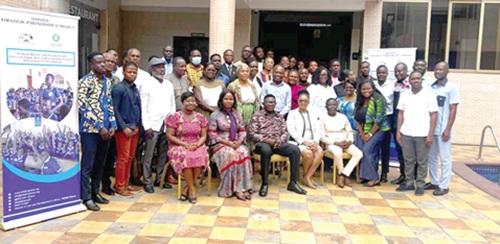
Proprietors and some representatives of private schools at a seminar in Accra have recounted how they cannot forget violence that they experienced at the hands of people they trusted, including teachers.
While some said they were defiled as children, others recounted how they were punished without their side being heard.
This was at a day's stakeholder engagement organised in Accra by WiLDAF for heads of private schools on the adoption of a gender-responsive, safer-workplace policy on school-related gender-based violence.
The Consultant to the project, Professor Simon Peter Kafui Aheto, called on them to imagine how some pupils in their schools were also going through the same trauma because there were no good reporting mechanisms for children who were victims to report for redress.
Scooping studies
Prof. Aheto, who took them through "Scooping studies on School-related gender-based violence (SRGBV) incident response mechanism in Ghana", called on the heads to make their schools comfortable and welcoming for their pupils.
Showing a picture of an 11-year-old girl in a school uniform sitting in a classroom with a look of pain and dejection on her face, he noted that many children—just like when they were in school—were experiencing SRGBV without knowing where to report it, which was ultimately affecting their studies.
He said SRGBV affected both boys and girls, though girls were impacted to a greater extent, and called on school heads to refrain from settling abuse cases internally, urging them instead to hand such matters over to the appropriate authorities for proper redress.
Prof. Aheto, who also took the participants through a "Toolkit on school-related gender-based violence response mechanism in Ghana", said many institutions' policies on non-discrimination and sexual harassment existed only as clauses buried in a general code of conduct, not as a standalone, actively communicated policy.
The National Programmes Coordinator, Melody Darkey, in an address, said WiLDAF Ghana was a leading women’s rights network committed to advancing gender equality and women’s rights.
She said in collaboration with Oxfam in Ghana/Oxfam Novib and a coalition of local partners, WiLDAF Ghana was implementing a five-year initiative under the DANIDA Strategic Partnership II (SP II) Project.
She said the project’s overarching goal was to promote a more equal, just, accountable, peaceful and sustainable Ghana.
A Programme Manager, Lois Aduamoah-Addo, who presented on Gender-Responsive, Safer-workplace Policy on SRGBV, said SRGBV such as beatings, fighting, insulting, name-calling and bullying among pupils frequently occurred in basic schools in the country.
She mentioned some of the effects of SRGBV as poor school performance, absenteeism and truancy, increased risk of dropout, and low self-esteem.
She mentioned some health and psychological effects as physical injuries, mental health issues, long-term health problems and increased risk of substance abuse.
Writer's email: rebecca.quaicoe-duho@graphic.com.gh