One health: Why Ghana cannot fight the next disease outbreak alone
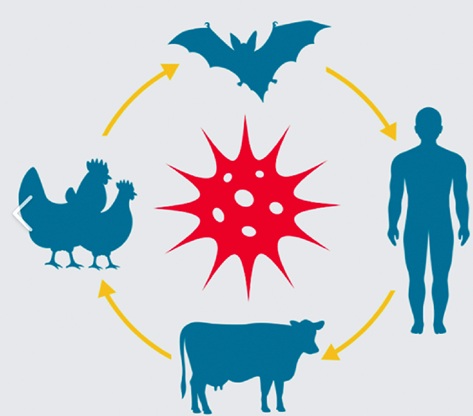
When bird flu swept through poultry farms in the Greater Accra, Ashanti, Central and other regions in past outbreaks, the response that followed involved veterinary officers culling birds, health workers watching for human cases, and environmental officers monitoring markets where live birds were sold.
Three different professions, three different mandates, but one shared problem.
This is the everyday reality of zoonotic disease in Ghana, and it is exactly why the country needs to take the One Health approach seriously.
It should not be viewed merely as a donor buzzword, but as a practical and effective strategy.
Zoonoses, which are diseases that transfer from animals to humans, are not rare occurrences.
They are a common aspect of life across Ghana, from rabies carried by stray dogs in our communities to Lassa fever linked to rodents in grain stores to avian influenza strains that periodically threaten our poultry industry.
Globally, it is estimated that six out of every 10 known human infectious diseases originated in animals.
In a country like Ghana, where farming, fishing, livestock rearing and wildlife bushmeat trade are integral to daily life, the animal-human interface is not a distant scientific concept.
It is present in our backyards, local markets, abattoirs and the kitchens.
Working in silos
For decades, the standard response to disease threats has been sectoral. When people fall sick, the Ghana Health Service responds.
When livestock die mysteriously, the Veterinary Services Directorate steps in.
When water sources or bushmeat trade routes are implicated, environmental agencies are called upon, often after the fact.
These institutions frequently operate with separate budgets, separate data systems, and separate chains of command, even when they are responding to the same outbreak.
The fragmentation of health systems has significant consequences.
Delays in diagnosing outbreaks often mean that human cases are identified before the disease can be traced back to an animal source, allowing it to spread further.
Additionally, surveillance data collected by veterinary teams is rarely shared in real time with public health epidemiologists.
As a result, communities receive mixed or delayed information about what is occurring and what precautions they should take.
The One Health approach presents a different model.
It is built on a simple recognition that human health, animal health, and environmental health are interconnected, and the professionals working in these areas, such as doctors, veterinarians, ecologists, laboratory scientists and community health workers, need to collaborate deliberately, not just when disaster strikes.
In practice
A functioning One Health system in Ghana would mean several things working together.
It will mean joint surveillance, where unusual animal deaths on a farm in the Ashanti Region are reported through a system that veterinary and public health authorities can both see, rather than sitting in a district office notebook.
It will mean shared laboratories, so that a blood sample from a sick farmer and a swab from his livestock can be tested using compatible protocols and cross-referenced quickly.
It will mean joint training, so that veterinary officers, district health directors, and environmental health officers understand each other's early warning signs and speak a common language during an outbreak.
It will also mean investing in community engagement long before an outbreak occurs.
Farmers, herders, market women, and hunters are often the first to notice something wrong with animals, like a chicken dying unusually fast, or dogs behaving strangely
If these observations can be channelled into a reporting system that people trust and understand, Ghana gains an early warning network that no laboratory alone can replicate.
Ghana has, encouragingly, taken steps in this direction. National frameworks and technical working groups linking veterinary services, health authorities, and environmental agencies exist on paper and, in pockets, in practice.
Institutions and universities have also begun to generate the kind of cross-disciplinary evidence on disease prevalence, transmission risk, and diagnostic gaps that policy needs to act on.
What is missing is not the concept, but the consistent political and financial commitment to fund it as core public health infrastructure rather than a project that runs only when external grants are available.
Why it matters
The cost of inaction is not just a theoretical concern.
Every rabies death in Ghana can be entirely prevented through coordinated dog vaccination campaigns and prompt post-exposure treatment, both of which require collaboration between veterinary and health systems working.
Every undetected spillover event in a live animal market represents a missed opportunity to prevent a small problem from becoming a national one.
As climate change alters the range of disease-carrying insects and pushes wildlife into closer contact with farming communities, the frequency of these spillover risks is expected to rise.
Ghana does not need to build a One Health system from nothing.
It needs to strengthen the coordination structures that already exist, fund joint surveillance and laboratory capacity adequately, and ensure that lessons from research are translated into standing operating procedures rather than filed away after the next conference.
Government, research institutions, and development partners each have a role, but so do ordinary Ghanaians: reporting sick or dying animals promptly, exercising caution around bushmeat and stray animals, and supporting vaccination campaigns for pets and livestock.
Disease does not respect the boundaries between ministries, and increasingly, it does not respect national borders either.
The next outbreak, whether it is avian flu, rabies, or something not yet named, will not wait for Ghana's institutions to decide whose responsibility it is.
One Health is not an abstract ideal. It is the practical recognition that protecting human health starts with protecting the animals and environments we share our lives with.
The writer is a Research Scientist,
Council for Scientific and Industrial Research-Animal Research Institute.
E-mail: owusuaalinda@gmail.com