Navy, UG sign MoU to fight crime, promote economic activities
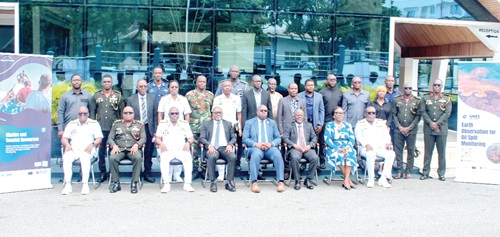
The Ghana Navy and the University of Ghana, Legon, have signed a Memorandum of Understanding (MoU) to find cutting-edge technological solutions to emerging complex security challenges in the nation's maritime space.
The agreement is also aimed at promoting a cross-fertilisation of ideas between academia and security agencies, as well as industry. The knowledge sharing via data and research from the university would help deal with unregulated and unreported fishing, combat robbery, pollution and smuggling, among other crimes that hinder the realisation of the full potential of the nation’s business on sea (blue economy).
Ultimately, the collaboration would contribute to economic growth, enhance maritime transportation and also deal with the challenges in the fisheries, oil and gas sectors.
And as part of the agreement, the College of Basic and Applied Sciences of the university will provide detailed information about the happenings on the sea to help track miscreants and other trading activities.
Signatories
The Chief of Naval Staff, Real Admiral Issah Adam Yakubu, and the Provost, College of Basic and Applied Sciences, University of Ghana, Prof. Boateng Onwona-Agyeman, signed for their respective institutions.
The event was on the theme: "High-level meeting on maritime domain awareness: The role of Naval forces and academia."
Use of technology
Real Admiral Issah Adam Yakubu said the Navy had gone further to explore the use of drone technology and satellites to improve its capabilities. He said Africa was working towards deploying its own satellite within the space to enhance the blue economy of the continent.
"Additionally, the Ghana Maritime Authority, in collaboration with the Navy, will soon take delivery of a state-of-the-art coastal surveillance system to replace the current one which has range limitations.
"We have signed a contract for this system and it comprises a high-tech comprehensive system which will be the second of its kind in the region after Nigeria," the Chief of Naval Staff added.
Collaboration
Prof. Onwona-Agyeman expressed gratitude to the Navy for the long-standing collaborations that had led to some successes they had chalked up together over the years. He said the university would provide data and analysis to enhance the work of the Navy, adding that data interpretation was also crucial in enriching the practical and academic experiences of students.
The Minister of Environment, Science, Technology and Innovation, Ophelia Mensah Hayford, said one of the key pillars of the National Integrated Maritime Strategy (NIMS) was the development of home-grown solutions that were informed by local knowledge and expertise.
"By taking advantage of the research capabilities of the University of Ghana and other academic institutions, we can develop innovative technologies and strategies that are specifically designed to address the maritime challenges we face.
"For instance, the use of satellite data for oil spill detection and ship monitoring is a prime example of how local expertise can be harnessed to improve the maritime sector," she said.
This was contained in a speech read on her behalf by the Director of Research, Statistics and Information Management at the ministry, Cephas Adjei Mensah. The minister further said that sustainable use of the ocean space was a collective responsibility that required the concerted effort of all stakeholders.
The President, African Space Council, Dr Tidiane Ouattara, expressed appreciation for the collaboration.