Indiscriminate dumping of refuse threatens Nyohini, Gumani forest reserves
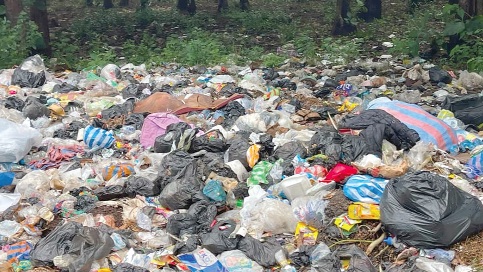
The Nyohini and Gumani forest reserves in Tamale, once prized for their greenery, are fast turning into dumping grounds, as mounting piles of plastic bags, bottles, food packaging and other refuse accumulating in the protected reserves.
The waste is scattered across sections of the forests, with some residents reportedly using the areas as dumping sites.
The problem is most visible along the road bordering the reserves, where the stench of decomposing refuse has become a daily discomfort for residents and road users.
Residents' concern
A resident, Mustapha Saeed, said the condition was making movement along the road uncomfortable.
"Whenever I am using this road, I usually take deep breaths at some sections of the road, especially where the rubbish is, because of the stench. I don't want to be affected," he said.
He indicated that some people also defecated in the forest, which further worsened the sanitary condition of the area.
Another resident, Najilawu Saeed, blamed the municipal assembly authorities for failing to prevent people from disposing of refuse in the forest.
She called for immediate measures to stop the practice, particularly around areas close to the road.
Environmental impact
An environmentalist, Joseph W. Abakari, told the Daily Graphic that the dumping could pollute water sources, contaminate the air and soil, damage vegetation and destroy habitats for wildlife and plants.
He added that plastics posed a serious hazard because they do not easily decompose and can remain in the environment for generations, compounding the damage over time.
He warned that the loss of vegetation driven by continued dumping would not only reduce the forest's capacity to absorb and store carbon, but could also alter local conditions, making degraded areas hotter and drier and accelerating habitat loss and biodiversity decline.
"If the dumping continues unchecked, it could permanently degrade the forest and undermine its ability to provide clean water and other important ecosystem services," Mr Abakari stressed.
Way forward
Mr Abakari called for collaboration among traditional leaders, local authorities and community-based organisations to improve waste management and prevent further disposal of refuse in forested areas.
"Sanctions should be a must where necessary to deter individuals and businesses from using forest areas as dumping grounds," he added.
He further called on the local assemblies, the Environmental Protection Agency and the Forestry Commission to strengthen enforcement against indiscriminate dumping in protected forest areas.
Meanwhile, efforts by the Daily Graphic to get the reaction of officials of the Forestry Commission proved futile.