Healthcare technology must not replace human touch - College of Physicians advocates
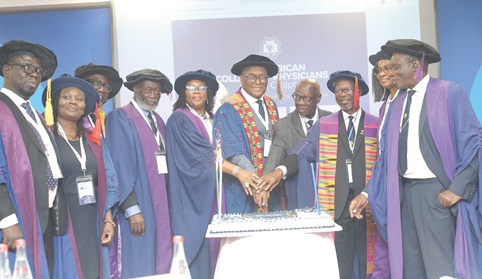
The Ghana Chapter of the West African College of Physicians (WACP) has cautioned that emerging technologies in health care must not replace the human touch in medical practice.
The call was made by the Vice-President of the WACP, Dr Henry Lawson, at the opening of the chapter’s 49th Annual General Scientific Meeting in Accra last Thursday.
“Though these have come to enhance our practice, they do not see a complete human being in front of them. A being that has emotions, needs compassion and a human touch to make their recovery better,” he said.
He said specialist training programmes must continue to evolve to address infectious diseases, non-communicable diseases and challenges associated with fragile healthcare infrastructure.
“We must strengthen our training programmes to prepare physicians for the evolving health needs of our people,” Dr Lawson said.
Golden Jubilee
The three-day Annual General Scientific Meeting also formed part of the college’s 50th anniversary celebrations on the theme, “50 Years of Excellence in Specialist Training: Advancing into the Future.”
It brought together members, trainees, policymakers, health institutions and other stakeholders to reflect on the contribution of the college to healthcare development in West Africa and discuss the future of specialist medical education.
The ceremony also featured goodwill messages from key health institutions, including the Ministry of Health, Ghana Health Service, Ghana Medical Association, Ghana College of Physicians and Surgeons, Ghana College of Nurses and Midwives, and Ghana College of Pharmacy.
It also saw the introduction of new members and Fellows, while participants officially opened the anniversary celebration through the cutting of the college’s 50th anniversary cake.
Shaping the future
Dr Lawson said the anniversary provided an opportunity for the college to assess its achievements and revise training programmes to reflect current medical evidence and practices.
“Research and innovation are not optional; they are the lifeblood of evidence-based solutions that improve patient care.
“It is appropriate and timely to decide to evaluate what we have been doing for the past five decades with the aim of developing modules and policies that fit modern evidence-based medical practice,” he said.
Growth
For his part, a Professor of Pathology at the University of Ghana Medical School, Professor Edwin Wiredu, highlighted the growth of the WACP and its contribution to postgraduate medical education across the region.
Prof. Wiredu said the college had expanded from 22 accredited training institutions in 1977 to 124 regional training institutions and hospitals, producing specialists who now serve in teaching hospitals, universities and health facilities across West Africa.
He said the college’s structured training, mentorship programmes and rigorous examinations had established strong standards for specialist medical education despite operating within limited resources.
Prof. Wiredu said the college had also embraced digital transformation through online residency applications, research proposal management systems and electronic examination processes.
He said the institution had expanded beyond its original Anglophone membership by integrating Francophone countries and working towards the inclusion of Lusophone nations.
Prof. Wiredu said the college’s future priorities included strengthening governance, research capacity, financial sustainability and efforts to address healthcare worker migration.
He said the long-term ambition was for the WACP to become a leading centre for postgraduate medical education and research in Africa.