Govt to build modern museum for looted artefacts — Foreign Minister
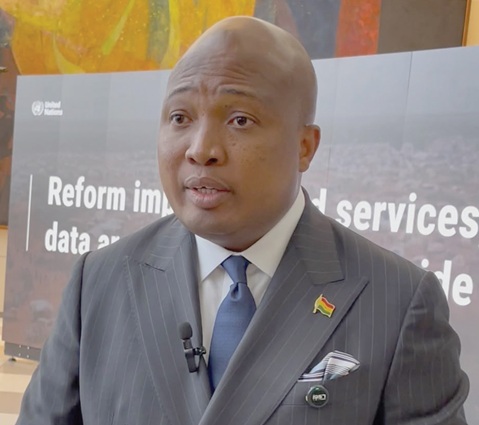
The government has made provision in the 2027 budget for the construction of a modern national museum to receive and preserve thousands of looted Ghanaian artefacts being returned from abroad.
The Minister of Foreign Affairs, Samuel Okudzeto Ablakwa, who disclosed this, said Ghana currently did not have a modern museum capable of housing the expected artefacts, hence the decision to build one.
Mr Ablakwa was speaking on the sidelines of the 81st United Nations General Assembly in New York last Monday on the government’s reparative justice efforts and plans to leverage heritage for tourism.
"That is why in our 2027 budget, which we presented, we have made provision for the establishment of a museum.
Ghana doesn't have a modern museum," he said.
Economic opportunities
The minister said the return of artefacts being sought presented a tremendous economic opportunity for the country through tourism.
"These are also tremendous opportunities for us to mobilise resources from tourists.
There are many people who want to come and see these artefacts that were looted centuries ago.
That is an economic opportunity.
These museums are going to create jobs, from construction to when they are completed and those who will work in these museums," he said.
Mr Ablakwa cited the Kwame Nkrumah Memorial Park as Ghana's number one tourism destination and said a new museum housing returned artefacts from The Netherlands, Germany, Portugal and France would significantly boost arrivals.
"You see how the Kwame Nkrumah Museum is our number one tourism earner.
Every visitor wants to go there. If we add a museum of artefacts that have been returned from the Netherlands, Germany, Portugal and France, many people will want to see them," he stated.
He disclosed further that the government was preparing a special museum for the head of King Badu Bonsu II, a former Ahanta king who resisted Dutch colonial rule and was beheaded after defeating Dutch forces before reinforcements were called.
Mr Ablakwa said the king's head was taken abroad and subjected to medical research for many years in an attempt to study his brain, and expressed satisfaction that Ghana had secured its return.
"King Badu Bonsu II's head will serve as an eternal memorial to the fact that there was resistance.
We fought back, and our chiefs even paid the ultimate price,” he added.
Mr Ablakwa said the artefacts would help confront narratives that Africans did not resist slavery and colonialism.