Ghana needs comprehensive emergency preparedness plan — UNFPA
The Country Representative of the UN Population Fund (UNFPA), Dr David Wilfred Ochan, has said Ghana needs a comprehensive emergency preparedness plan supported by regular practice and strong partnerships.
He said such an initiative should hinge on planning, practice and partnership that can respond quickly and effectively to emergency health outbreaks such as COVID-19 and Ebola.
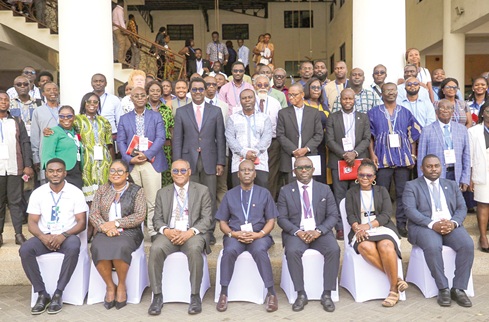
Dr Ochan was speaking at the 15th Medical Knowledge Fiesta of the Ghana College of Physicians and Surgeons (GCPS), organised in collaboration with the Ghana Physicians and Surgeons Foundation (GPSF) of North America, in Accra last Wednesday.
The three-day event was on the theme: “Strengthening emergency preparedness in Ghana: The role of the state, health workers and training institutions.”
Key pillars
Dr Ochan mentioned three key pillars - preparedness, planning and partnership, which he said were important in addressing emergencies.
He said a preparedness plan should clearly define leadership and coordination structures, while ensuring the pre-positioning of essential medicines and supplies and the availability of adequate surge capacity to respond to emergencies.
Dr Ochan said there was also the need to establish clear protocols for activating emergency response plans to ensure that the country mounted an effective national response when disasters occurred.
He also said institutions needed to regularly rehearse and test their emergency response systems using different scenarios to help stakeholders understand how systems would respond to different emergencies and build resilience before an actual disaster occurred.
Preparedness should not begin when an emergency has already occurred, Dr Ochan added.
On partnership, he said effective emergency response required the involvement of communities, health workers, the government, the private sector and the media.
The Dean of the School of Medicine at the University of Health and Allied Sciences (UHAS), Prof. Yaw Asante Awuku, said emergency preparedness should not be viewed solely as the responsibility of emergency departments or the government.
He said emergencies such as road traffic accidents, strokes, myocardial infarctions and epidemics required systems that were built, financed, coordinated and sustained.
Prof. Awuku said the state had a responsibility to provide an enabling environment for emergency preparedness through effective policies, financing and resilient health infrastructure.
“Preparedness means knowing what to do, knowing who to call, knowing where to refer and being able to act decisively under pressure,” he said.
Knowledge sharing
The Chairperson of the Local Planning Committee, Dr Dziffa-Bella Ofori-Adjei, said the Medical Knowledge Fiesta had over the past 15 years served as a platform for continuous professional development, knowledge sharing, skills enhancement and multidisciplinary engagement.
She said the annual programme enabled physicians, surgeons, residents, specialists, policymakers and other health professionals to share knowledge and examine ways of improving healthcare delivery.
Dr Ofori-Adjei said the 15th edition was particularly significant because emergencies did not give prior notice, making preparedness essential at the state, hospital, training institution and individual healthcare professional levels.