Gender minister calls for media support in advancing affirmative action
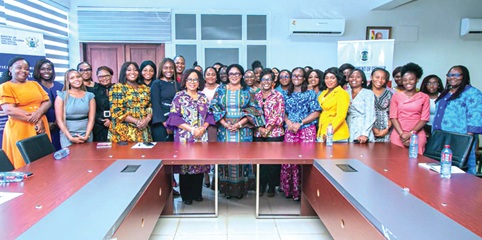
The Minister for Gender, Children and Social Protection, Dr Agnes Naa Momo Lartey, has called on women in the media to help to ensure that the Affirmative Action Law work in the country for the betterment of all.
According to her, when the law is effectively implemented, it would go a long way to help both men and women as well as the marginalised in society.
The minister made the call at a media sensitisation programme organised by the Gender Equity Committee under the AA Law.
She said it was prudent for all to ensure that the Affirmative Action Law translated into real, felt impact for citizens rather than remaining a policy on paper.
She said gender inclusion was not an “afterthought or an add-on” for the ministry but a central part of its mandate.
She noted that the country had moved past the advocacy stage for the Affirmative Action Act and must now focus on effective enforcement and measurable outcomes.
She stressed that the push for gender balance was not about any single sex or group but about the development of Ghana as a whole, arguing that the country could not progress with only one sex “at the helm.”
She expressed concern over the country’s slow progress in women’s political representation, particularly in parliament and local government, where female representation stands at around 40 per cent.
She said the country must accelerate efforts to close this gap, warning that missed electoral cycles were difficult to recover from, unlike appointive positions.
Dr Charity Binka, Executive Director, Media Women and Change, in her remarks, said the implementation of the Affirmative Action Act, 2024 (Act 1121) will determine whether Ghana's 13-year struggle to pass the law translates into real change for women and girls.
She said the country had taken a bold step by passing Act 1121, which she described not as a favour to women but as a development tool.
The Act requires 30 per cent women's representation in all leadership and decision-making by 2026, rising to 50 per cent by 2030, but she noted that passing a law was different from living it.
She said the real test would be its effective implementation, where many laws fail, and where the media must not fail.
Dr Binka, who outlined three unique roles for women in the media -that is to inform, monitor and influence- urged practitioners to take the Act out of legal books into local languages, morning shows and community radio; to monitor compliance through Gender Equity Policies, Compliance Certificates and Annual Reports demanded by the Act, and to control the narrative by promoting women as leaders and experts and ending stereotyping.
Dr Binka stressed that affirmative action is not about replacing merit with gender, but about addressing structural barriers that have historically prevented qualified women from having equal opportunities to lead.
She called on women to stand together across sectors, share knowledge, mentor one another and collectively demand accountability, adding: “The law may open the door, but it is our collective action that will keep it open for generations of women and girls to come.
The Head of the Gender Equity Committee at the Ministry of Gender, Children and Social Protection, Vera Karikari Bediako, who took the media through the AA Law and what had been done to ensure its implementation, said so far, a lot of public sensitisation had been held across sectors.
She said the successful implementation of the Act now required the active participation of female media practitioners, saying through gender-sensitive reporting, public education and amplifying women's voices, female media practitioners could help shape perceptions, promote accountability and advance gender equity in the country.
The Chief Director at the ministry, Dr Mariam Kpakpah, in a remark, also called on the media to help in the implementation of the Act.
Writer’s email:rebecca.quaicoe-duho@graphic.com.gh