Education key to peace, democracy — Ibn Chambas
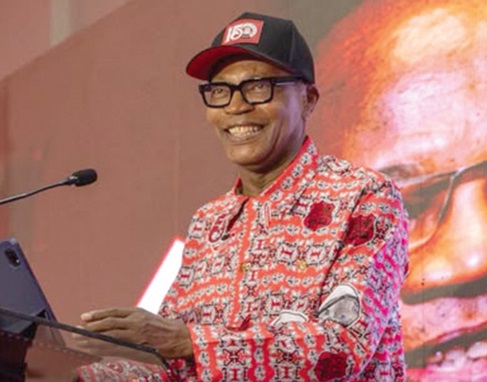
The African Union (AU) High Representative for Silencing the Guns, Dr Mohamed Ibn Chambas, has called for renewed investment in education, describing it as the most effective tool for building peaceful societies, strengthening democratic governance and nurturing responsible citizens.
He said while countries often measured their wealth by natural resources or military strength, their long-term prosperity and stability would ultimately depend on the quality of education they provided to their people.
Delivering the second Mfantsipim Sesquicentennial Lecture in Accra on the theme, “Educating for Peace, Democracy and Responsible Citizenship,” Dr Ibn Chambas said education remained humanity’s greatest investment because it bridged the gap between poverty and prosperity, promoted innovation and cultivated citizens capable of advancing the common good.
“In the midst of these competing realities, one truth remains constant: the future of every nation will ultimately be determined, not by the abundance of its natural resources, nor by the size of its military, but by the quality of the education it provides its people,” he said.
He explained that peace, democracy and responsible citizenship were inseparable pillars of national development, stressing that societies could not achieve sustainable progress without investing deliberately in education.
“Without education, peace becomes fragile.
Without peace, education cannot flourish. Without responsible citizenship, democracy loses its moral foundation, and without democracy, sustainable development becomes elusive,” he said.
Challenges
Dr Ibn Chambas observed that the world was undergoing rapid transformation driven by artificial intelligence, climate change, digital technology and geopolitical tensions, while democratic institutions were increasingly being threatened by misinformation, political polarisation and declining public trust.
He said those developments required educational systems that prepared young people not only with academic knowledge but also with critical thinking skills, ethical values and the ability to adapt to changing global realities.
Referring to lessons from countries such as Singapore, China and Finland, he said strategic investment in education had transformed their economies and strengthened national development.
Although Ghana ranked among Africa’s countries with relatively strong education systems, he cautioned against complacency.
He therefore challenged stakeholders to examine whether the country’s educational system was producing graduates capable of competing globally, creating jobs, embracing innovation and defending constitutional democracy.
Peace
Drawing on his extensive experience as a diplomat and mediator with the African Union (AU), ECOWAS and the United Nations (UN), Dr Ibn Chambas said education was a strategic investment in national security because societies that neglected it often paid a higher price through instability, violence and underdevelopment.
“Conflict seldom begins with the sound of a gun. It begins with exclusion, hopelessness and when young people lose confidence that society offers them a fair chance to realise their aspirations,” he said.
He advocated the inclusion of peace education in Ghana’s curriculum to equip children with skills in dialogue, tolerance, conflict resolution and respect for diversity.
He reiterated that such values were essential nation-building skills that would strengthen national unity and prevent conflict in an increasingly diverse and digitally connected world, describing value-based education as one of the country’s most effective long-term anti-corruption strategies.
He thus urged educational institutions to shape both the intellect and the conscience of students.
Technology
Dr Ibn Chambas said Ghana’s educational system must evolve to prepare young people for the Fourth Industrial Revolution, where artificial intelligence (AI), robotics, biotechnology and digital technologies were rapidly transforming economies and labour markets.
He stressed that while AI presented enormous opportunities in areas such as health care, agriculture, education and public administration, it also posed ethical challenges through misinformation, hate speech and manipulated digital content.
He further called for reforms to align the country’s curricula with emerging global trends by strengthening science, technology, engineering and mathematics (STEM), technical and vocational education, research, innovation and partnerships between academia and industry.
Custodians
Addressing current students of Mfantsipim School, Dr Ibn Chambas reminded them that they were custodians of a proud legacy and had a responsibility to use their education in service to society.
“Your education is not solely for your personal advancement; it is a trust placed in you by your parents, your teachers, your community and your nation. Use it wisely,” he advised.
Background
The Second Mfantsipim Sesquicentennial Lecture formed part of activities marking the 150th anniversary of Mfantsipim School and brought together old boys, traditional leaders, diplomats, academics, military officers and other distinguished personalities to reflect on the role of education in promoting peace, democracy and responsible citizenship in Ghana.