Collaboration needed to turn sustainability commitments into action — Stakeholders
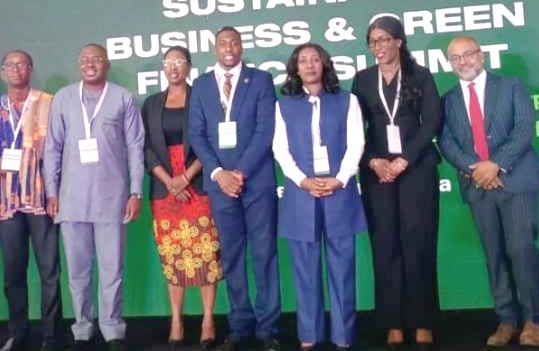
Some business, financial and development-sector stakeholders have called for stronger collaboration among government, businesses and financial institutions to turn Ghana’s sustainability commitments into practical investments.
That, they said, would strengthen the economy, improve business competitiveness and create jobs.
They said although Ghana had made progress in developing policies and regulations to support sustainable development, greater effort was needed to translate those frameworks into action and ensure that businesses could access the finance, technical support and markets required for the transition.
The stakeholders are the Executive Director of the United Nations (UN) Global Compact Network Ghana, Tolu Kweku Lacroix; the UN Resident Coordinator in Ghana, Zia Choudhury; the Deputy Managing Director of Consolidated Bank Ghana (CBG), Florence Adei Ohene, and the Greater Accra Chairman of the Association of Ghana Industries (AGI), Tsonam Akpeloo.
They made the call at the 2026 Sustainable Business and Green Finance Summit in Accra, organised by the UN Global Compact Network Ghana on the theme: “Bridging Capital, Compliance, and Commercial Pipelines for Ghana’s Sustainable Transition.”
The summit brought together policymakers, financial institutions, development finance institutions, private-sector leaders, industry associations and technical experts to explore practical ways of mobilising capital and accelerating Ghana’s transition to sustainable business.
Mr Lacroix said the country had established important policy and regulatory frameworks to support the transition, including the Ministry of Finance’s Green Finance Taxonomy and the Bank of Ghana’s Sustainable Finance Road map.
However, he said the country needed to move beyond frameworks and commitments to ensure that sustainable projects received the capital and commercial support required to become viable investments.
“The framework, therefore, is in place. What we require now is the delivery,” he said.
He said businesses also faced the challenge of meeting increasingly demanding environmental, social and governance (ESG) requirements from regulators, investors and international supply chains.
For his part, Mr Akpeloo said businesses needed practical support to understand the cost of such investments, their expected savings and the time required to generate returns.
He said the AGI Energy Service Centre was supporting businesses with energy assessments and practical energy-saving plans, while the Energy Smart Businesses project, funded by the World Bank and implemented by the centre, was helping selected businesses undertake energy audits and develop tailored energy-saving measures.
He said stronger links between technical support and financing institutions were needed to help businesses move from sustainability ambitions to projects with clear costs, benefits and implementation plans.
Support
The second Deputy MD of CBG said financial institutions had a responsibility to support businesses as they adjusted to the emerging sustainable economy.
“Partnerships among banks, development partners, regulators and industry could provide technical expertise, guarantees and blended financing to reduce risks and improve the bankability of sustainable projects,” she said.
She added that the sustainable projects could require longer periods to generate returns and sometimes involve businesses with limited operating records, making appropriate risk assessment and financing structures important.
The UN Resident Coordinator in Ghana said investors needed better-prepared projects, reliable information and conditions that allowed them to properly assess risk.
Mr Choudhury also stressed the importance of helping small and medium-sized enterprises, women entrepreneurs and businesses outside Accra participate in the transition.
“Money is out there, in this room, in this country.
It’s just that we don’t have the conditions yet where good projects can be identified, prepared and financed in workable terms,” he said.