The case Netanyahu put before the UN
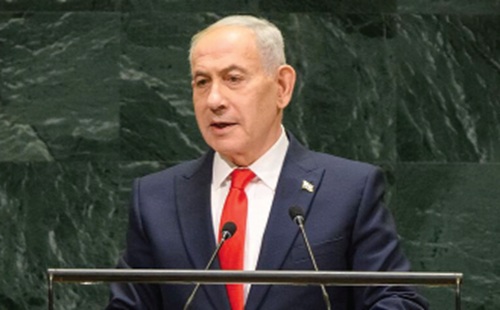
Netanyahu’s UN speech was never going to be judged only by what he said.
The walkout before he began had already turned the chamber into a referendum on Israel’s conduct in Gaza.
Yet, the episode exposed a difficult question: can a government accused of grave wrongdoing still make a serious case for its security, sovereignty and military decisions? Yes.
Whether that case persuades is separate.
Netanyahu’s central argument rested on a basic fact: Israel’s war in Gaza followed the Hamas-led assault of October 7, 2023, in which about 1,200 people in Israel were killed and 251 were abducted, according to Israeli figures cited by Reuters.
Israel, therefore, entered the war after a mass attack on its territory and population.
That distinction matters because assessments of Israeli conduct must account for the conflict’s origin, the continuing threat posed by Hamas and the state’s obligation to protect its citizens.
The scale of Palestinian deaths, however, remains significant.
Gaza health authorities have reported more than 73,000 Palestinian deaths since the war began, while UN humanitarian reporting documents displacement, destruction, shortages and inadequate medical capacity.
These figures do not by themselves establish wrongdoing by Israel nor do they capture the complexities of urban warfare.
A credible defence should acknowledge civilian suffering while addressing Israel’s security challenges directly.
Security Cannot Be Separated from Context
Netanyahu’s security argument also concerns the environment beyond Gaza.
In his UN address, he described Israel’s decision to attack Iran as among the easiest decisions he had made and argued that Israel was defending itself and other countries threatened by Iran.
His claims about Iran’s nuclear capabilities are contested, but Israel and Iran have been engaged in a long confrontation involving direct attacks, proxy forces, nuclear concerns and regional deterrence. Ignoring that context produces an incomplete account of why Israeli leaders describe military action as existential.
The walkout deserves careful interpretation. Dozens of delegates left as Netanyahu approached the podium, following calls to protest Israel’s Gaza campaign.
The demonstration was politically significant, but it was not a factual determination of whether Israel complied with international law. Legal questions require evidence, institutional findings and distinctions among alleged war crimes, crimes against humanity, genocide and lawful military action.
That difference matters because criticism of Israel is not merely rhetorical.
The International Criminal Court issued an arrest warrant for Netanyahu in November 2024, alleging war crimes and crimes against humanity related to Gaza. Israel rejects the allegations.
The warrant is a judicial development, not a conviction, but it demonstrates why Netanyahu’s defence cannot be dismissed as political theatre.
His government faces international legal scrutiny and a rigorous defence must answer the allegations rather than simply attack the institutions raising them.
Israel’s Right to Self-Defense and Legal Duties
At the same time, Israel’s security argument deserves careful consideration alongside its obligations towards civilians.
The laws of armed conflict require distinction, proportionality and precautions in attack.
Israel can reasonably argue that Hamas operates among civilians and that defeating such an organisation presents extraordinary difficulties.
Those realities are important when evaluating military operations.
They do not remove legal obligations, but neither should civilian harm alone establish wrongdoing. Each operation must therefore be assessed on its evidence, context and objectives.
The strongest part of Netanyahu’s broader case is the insistence that Israel’s security concerns remain part of the international conversation.
The October 7 attack, the hostage crisis, Hamas’s armed capacity, Iran’s confrontation with Israel and the danger of regional escalation are substantive security realities.
A diplomatic system that discusses Palestinian suffering while treating those realities as irrelevant will struggle to produce durable peace.
The counterargument is substantial: security concerns cannot become a universal solvent for accountability, but civilian harm does not by itself establish Israeli wrongdoing.
More than 73,000 Palestinian deaths, destruction and deprivation warrant scrutiny of Israeli decisions, alongside the security context.
UN reporting has documented shortages
UN reporting has documented shortages of medical supplies, water and sanitation services. Self-defence explains why a state may fight; it does not remove the obligation to conduct that fight lawfully.
What the International System Must Reckon With
That is ultimately why Netanyahu’s UN appearance should be read neither as vindication nor as disqualification.
His speech articulated a coherent strategic narrative: Israel faces armed enemies, cannot outsource its security to international institutions, and believes military force is sometimes necessary to prevent threats from becoming catastrophic.
Critics are equally entitled to argue that Israel’s methods have imposed unacceptable civilian costs and may undermine the security they are intended to achieve.
The deeper issue is what the international system does with competing truths.
Israel has legitimate security interests.
Palestinians have legitimate claims to safety, dignity and political rights. International law imposes duties on all parties.
The challenge is not choosing which reality exists. It is holding all three realities together.
Netanyahu’s speech mattered because it brought that argument into the UN chamber, even as delegates walked out.
The walkout communicated condemnation. It did not settle the questions of law, security, proportionality or responsibility that remain.
A serious international debate must resist two opposite simplifications.
One treats Israel’s security claims as sufficient to answer every criticism.
The other treats civilian suffering as proof that Israel’s security concerns are fabricated.
Neither proposition follows automatically from the evidence
Neither proposition follows automatically from the evidence.
A rigorous assessment must examine military decisions individually, distinguish facts from allegations and recognise that Hamas’s conduct, Israeli conduct and the humanitarian consequences of war are related without being interchangeable.
The credibility of international diplomacy will ultimately depend on whether it can demand accountability from Israel while also taking Israeli security fears and Palestinian rights seriously.
The UN chamber does not become more truthful because delegates remain seated, nor less truthful because they walk out.
What matters is whether governments and international institutions confront the evidence, apply consistent legal principles and pursue arrangements that reduce the danger of another cycle of war.
Netanyahu’s address offered Israel’s case
The international community’s responsibility is to test that case against law, evidence and the realities experienced by civilians on every side.