Exciting political brands, opportunistic spongers
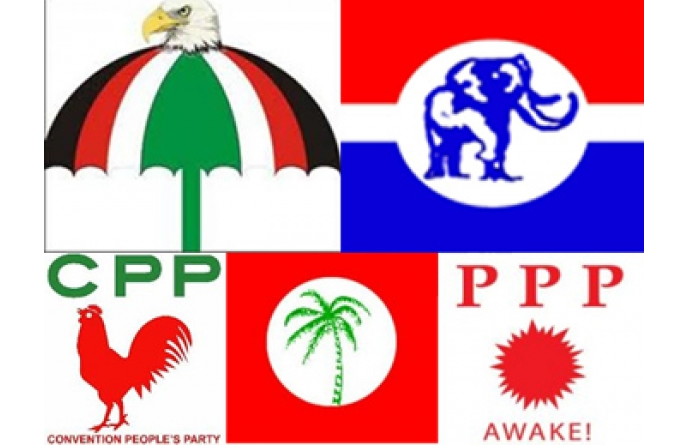
Branding is a marketing tool but it originated from the need to identify a product or an item by the way it is designed, the beneficial values to be derived from it and the name by which it is known.
In fact, anything that has a name is a brand. This may be too simplistic for the marketing gurus but would do fine for Mr Frazier’s purpose.
By this simple definition, a political party is a huge and complex brand with an array of portfolio of brands. The flagship is the flag bearer who must reflect, as far as possible, the objectives and values of his party. He is the field commander leading quite a crowd that may sometimes behave like warring factions. The flag bearer must have the skill and temperament of a consensus builder. In the event of conflicts, he must act the damage limitation artist and a healer.
The party structure may have the mechanism to resolve all conflicts but in such a complex market place where each officer may have his own ambitions, who can tell if some top people are not setting up their own small fires and stoking them through proxies and surrogates?
No partisanship intended. Mr Frazier would like to congratulate the New Patriotic Party (NPP) for patching up all the rifts that a year ago threatened to rip up the party. However, there is no guarantee that the absolute peace that seems to reign currently in the party would still persist in the event of the NPP winning Election 2016.
Recently, there has been a flood of endorsements from characters with mercenary intentions. What would a supporter such as Agya Koo or indeed Awal Mohammed bring to their new party? How would they behave if there is something to share and they feel discriminated against? They constitute an entirely new set of brands. Call them “stomachists” who need to be watched.
The flag bearer must excite the electorate as a good flagship brand does. In this wise, the recent craze of Kalyppo drinking by the NPP supporters in imitation of Nana-Akuffo Addo is relevant. However, kalyppo is an entirely unrelated brand to the NPP as a party. Unless it could be proved that the Kalyppo franchise is owned by the NPP or that the party does profit from its sales, one is at a loss as to why the drinking of the beverage was tacitly promoted during the mammoth manifesto launch. A good brand must not associate itself with a weak unrelated brand.
Once upon a time, a politician taunted the NPP with the slogan, “If you want power, go drink Guinness.” This excited some inexperienced marketers who wanted to seize on the slogan to promote sales but they were promptly stopped by the brand owners for the same reason that I do not buy bread wrapped in party colours in Nsawam. There was also the example of ABC cloth printed by GTP being used to promote ABC Lager beer in the mid-1990s. While cloth sales sky-rocketed, ABC beers, plummeted, all due to the ill-thought enthusiasm of amateurs parading as marketing specialists. The moral is that NPP should not allow its brand to be diluted by association.
The disqualification of 12 out of the 16 presidential candidates for one infraction of one or the other of the electoral laws confirms one’s suspicion that there are too many “Me too” brands. They are only in the race to take advantage of the noise in the market place. They may not, between all 12, garner more than 10 per cent of the votes to constitute a Third Force and force a coalition. No tears at all for them.
As for the mammoth rally at the NPP manifesto launch, Mr Frazier watched the scene on TV and was dazed. Then the famous saying attributed to Sir Winston Churchill came to his mind: “Great numbers are an explanation to great changes.” But this way of thinking brings complacency and “We’ve-already-won syndrome that made the party laugh from the wrong side of the mouth in 2008 and 2012. Who said the National Democratic Congress (NDC) could not have put on a show of force of that size at their manifesto launch, if they had so wished?
As Mr Frazier’s Fante in-laws always remind him, “Aban ye dur.”