Governance gaps, transparency:
Football in Ghana is a national asset that unites communities, inspires pride and creates economic opportunities. Yet, its governance remains troubled by weak accountability, limited financial transparency and declining national team performances.
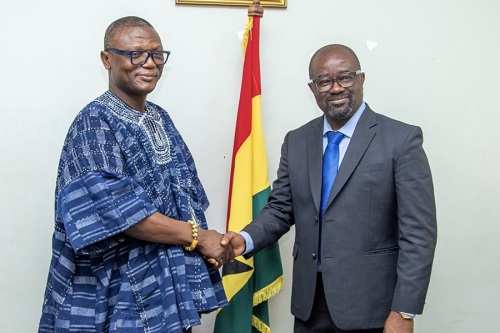
The recent meeting between the Ministry of Sports and Recreation and the Ghana Football Association (GFA) was hailed as a turning point. However, its focus on coaching reforms left youth development, women’s football, infrastructure and fan trust largely unaddressed. The exclusion of the National Sports Authority (NSA), the statutory body mandated to oversee sports, also raises questions about accountability and the business of football.
Gaps
Under the Sports Act, 2016 (Act 934), the NSA is mandated to supervise and coordinate sporting disciplines. Its exclusion from the recent reform discussions undermines this role and weakens oversight.
Sponsors and investors require accountability, but the absence of the NSA leaves the ministry and the GFA operating through a bilateral arrangement with limited independent checks.
The GFA’s reliance on government financial support while asserting autonomy under FIFA statutes further complicates governance. Tensions between national laws and international football regulations risk creating a fragmented system in which accountability is diluted.
Without clear oversight, sponsorship agreements may be negotiated without adequate public scrutiny, creating opportunities for favouritism and mismanagement.
Transparency, sponsorship
Transparency is essential to football’s commercial success. Sponsors need confidence that their investments will be managed responsibly and deliver value.
In Ghana, betting companies dominate football sponsorship, while major telecommunications, banking and consumer goods firms remain hesitant to commit, partly because of weak financial disclosure and limited independent auditing.
This narrow sponsorship base undermines investor confidence and fan trust. Supporters need assurance that sponsorship revenue is being invested in grassroots development, infrastructure and women’s football rather than merely addressing immediate financial needs.
Poor transparency also limits commercial opportunities in broadcasting rights, merchandise sales and stadium development. These revenue streams require credible financial management and clear commercial arrangements.
The exclusion of the NSA creates three major risks: reputational damage to sponsors, continued dependence on betting companies and declining fan confidence. Reduced trust can affect stadium attendance, merchandise sales and public engagement.
Without transparency, Ghanaian football will struggle to attract long-term investment needed to develop talent, infrastructure and competitive teams.
Lessons
Nigeria, South Africa, England and Germany offer useful lessons for Ghana.
The Nigeria Football Federation has emphasised corporate governance and independent auditing of sponsorship revenue. Such measures can reassure sponsors and encourage investment from banks, telecommunications firms and consumer brands, although corruption remains a challenge.
South Africa’s Premier Football League demonstrates the value of diversified sponsorships, broadcasting arrangements and fan engagement. Its experience highlights the need to develop multiple revenue streams rather than depend on a narrow group of sponsors.
The English Premier League illustrates how financial regulations, auditing and independent governance mechanisms can strengthen credibility and attract international brands. Ghana should adopt appropriate disclosure and accountability practices to improve its commercial appeal.
Germany’s Bundesliga also offers lessons in community accountability. Its ‘50 plus one’ rule generally ensures that club members retain majority voting control, preserving supporters’ influence in governance. This demonstrates how commercial success can coexist with community participation.
These examples highlight the importance of independent audits, diversified revenue, financial disclosure and fan engagement. Ghana should adapt these practices to its own institutional and legal environment.
Path to reform
Ghana must adopt a coordinated strategy to close governance gaps and restore confidence.
First, a tripartite framework involving the Ministry of Sports and Recreation, the NSA and the GFA should be established. The NSA must participate in decisions affecting national sports policy, including coaching appointments, while respecting the GFA’s legitimate autonomy under FIFA regulations. The current arrangement, which sidelines the NSA, should be reconsidered.
The NSA also needs competent leadership with expertise in sports management and the business of sport. Its oversight responsibilities should be protected from undue political interference, with support from the ministry and Parliament’s Select Committee on Sports.
Second, independent annual audits should be mandatory for relevant football institutions.
Third, the NSA, the GFA and clubs should publish sponsorship agreements and audited financial statements online, allowing supporters and investors to monitor the use of funds while protecting legitimate commercial confidentiality.
Fourth, football authorities should attract sponsors from telecommunications, fintech, banking and consumer goods by demonstrating sound financial management and measurable returns. Finally, fan engagement must become a priority, giving supporters meaningful opportunities to scrutinise decisions and contribute to community football development.
Football is a national asset whose protection requires more than changes to coaching arrangements. Ghana must strengthen institutional oversight, reconcile domestic sports laws with applicable FIFA regulations and make transparency central to football management.
By learning from other leagues, Ghana can attract sustainable investment, support grassroots and women’s football and restore public confidence. Governance reform and commercial development must advance together if Ghanaian football is to thrive.
The writer is a
Lecturer in Sport Management and Marketing, School of Sports and Exercise Medicine, University of Health and Allied Sciences
Email: fkusi@uhas.edu.gh