Contributions under SSNIT Informal Sector fund rises to GH¢75m
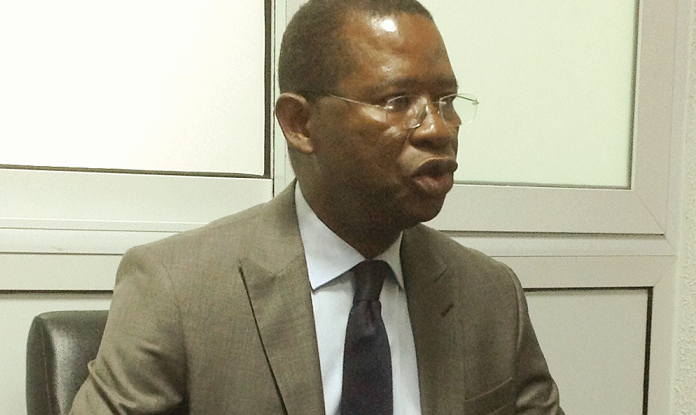
Over the last three years, contributions by informal sector workers into the SSNIT Informal Sector Fund (SISF) grew by 33.3 per cent to more than GH¢75 million.
This confirms expectations from stakeholders that the informal sector, if properly organised, could serve as a good source of funding to businesses seeking long-term capital.
The number of contributors has also risen from around 60,000 in 2012 to 150,000 people as of May, this year, the Pensions Fund Administrator and Marketing Manager of NTHC, told the GRAPHIC BUSINESS in Accra.
He spoke to the paper after a media briefing on the 40th anniversary of the NTHC.
The company, which was set up in 1976, has since made strategic contributions on the financial market.
it is now aiming at entrenching that role while improving its operations in key sectors of the market.
One such areas is the pensions market, which is beginning to attract bigwigs after going through a successful reform a few years ago.
The acting Managing Director of NTHC, Mr Francis Apanka, said one area that would benefiut under its pensions drive would be the informal sector.
He explained that the company was aiming at using the SISF to help reach out to informal sector workers in abid to encourgae them to save towards retirement while mobilising capital for long term investments.
Reviving SISF
Contributions under the SISF, which is currently managed by NTHC, was about GH¢25 million in 2012, when the company took over its management from the Social Security and National Insurance Trust (SSNIT).
The transfer was as a result of a new arrangement aimed at weaning the trust off that department to enable it to concentrate on its core mandate – the management and investment of pension contributions.
Although returns on the fund were bearish prior to the takeover, Mr Ollennu said it had since picked up, thanks to the injection of high management expertise and technology into its operations.
“We go all out to talk to people, convince them to join and afterwards make it easier for them to access their information. Because of that many people see the need to join,” he said.
Operation of SISF
Under the current arrangement, contributors, ranging from market traders to commercial drivers, are allowed to make daily contributions into their accounts. The money is then divided into two equal parts and deposited into the savings and the retirement benefit account.
Unlike the retirement benefit account, contributors are allowed to make withdrawals from the savings account from time to time while the latter is available to them only after they have gone on pension.
Getting closer to contributors
Mr Ollennu said public response to the fund had been positive after being sluggish in the early part of the takeover.
“When we took over, people were not sure how things were going to be but with time, there has been a positive response and that is very encouraging,” he said.
Going forward, he said the fund would continue to bring its services closer to the general public to help mop up excess money from informal staff for the fund to grow.
He explained that the unique nature of the fund required that the company moved to places where majority of the informal sector workers were based.
Currently, he said the company had opened branches in eight regions nationwide while working to open additional ones in the two upper regions, where it only has contact offices.
He mentioned Ho, Kasoa and Techiman as some of the places the company will be opening new offices in over the next few months.
He thus called on the general public to patronise the fund as a way of helping to prepare themselves for retirement while saving money for future use. –GB